The Opening
If your title disappeared tomorrow — who are you?
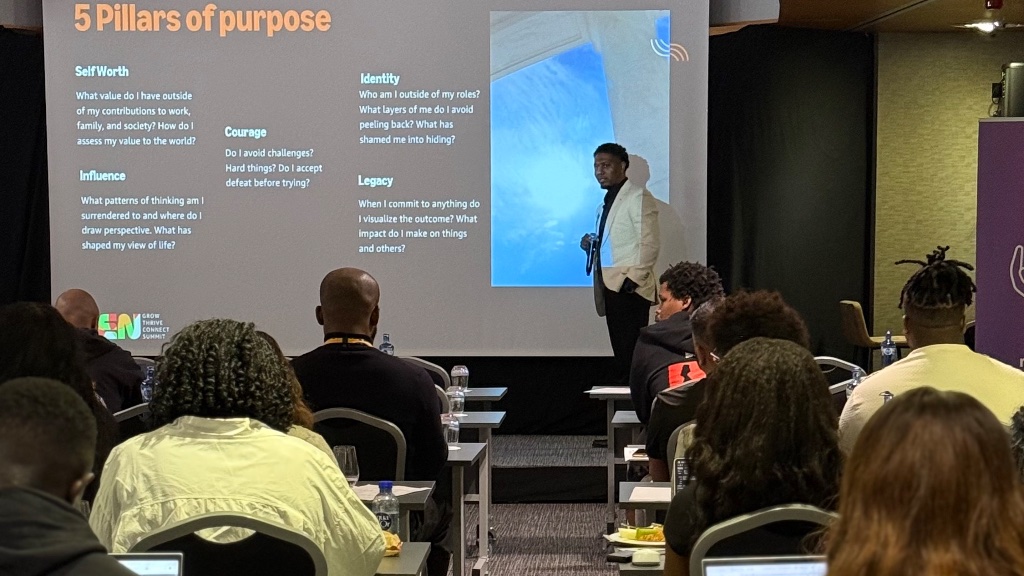
Over the last decade, I've asked that question in rooms all over the country.
Executive offsites. Leadership retreats. Early-career cohorts. Entire organizations navigating change.
And the reaction is almost always the same.
Not awkward silence. Not thinking silence.
The kind that happens when someone realizes they've never separated who they are from what they do — and that the absence of that separation explains more than they expected:
→ The burnout they couldn't name.
→ The promotion that didn't feel like relief.
→ The AI announcement that felt personal.
Across industries and leadership levels, the pattern repeats.
Not a career problem. An identity fracture.
And right now? That fracture has a spotlight on it.
AI didn't create the instability. It revealed it.
The Insight
Why AI feels personal right now
AI isn't just automating tasks. It's stress-testing identity.
For years, most professionals have fused three things together:
So when anything threatens the title — layoffs, restructures, automation, even someone younger getting promoted — it doesn't land like a workplace shift.
It lands like personal instability.
Because if your worth has been stored inside your role, any threat to the role feels like a threat to you.
That's why conversations about AI feel so charged right now. It's not just: "Will my job change?" It's:
"If my output changes… who am I then?"
The Diagnostic
When work starts to feel personal
You don't need a survey to know if this is showing up for you. Just check the reactions:
If any of those hit — that's not weakness.
That's borrowed self-worth.
Confidence rented from a role instead of owned by identity. Anything rented can be taken back.
The Stack
A few tools to keep you equipped
The professionals least threatened by AI aren't the most technical. They're the most adaptable.
Best for drafting, brainstorming, structuring ideas, and getting unstuck quickly.
Strong for complex decisions and long-form writing. Especially useful for difficult conversations.
Works well across Google tools. Helpful for summarizing reports and analyzing multiple documents.
Every response is sourced. Best used when accuracy matters — research pulls, presentations, data points.
None of these tools replace identity. They amplify capability. And capability reduces fear.
This Week
One question worth sitting with
"If your title disappeared tomorrow, how would you introduce yourself?"
If the answer comes easily, you've already done some of the work. If it doesn't — that's not failure. That's awareness. And awareness is where rebuilding starts.
Next Steps
Share this issue